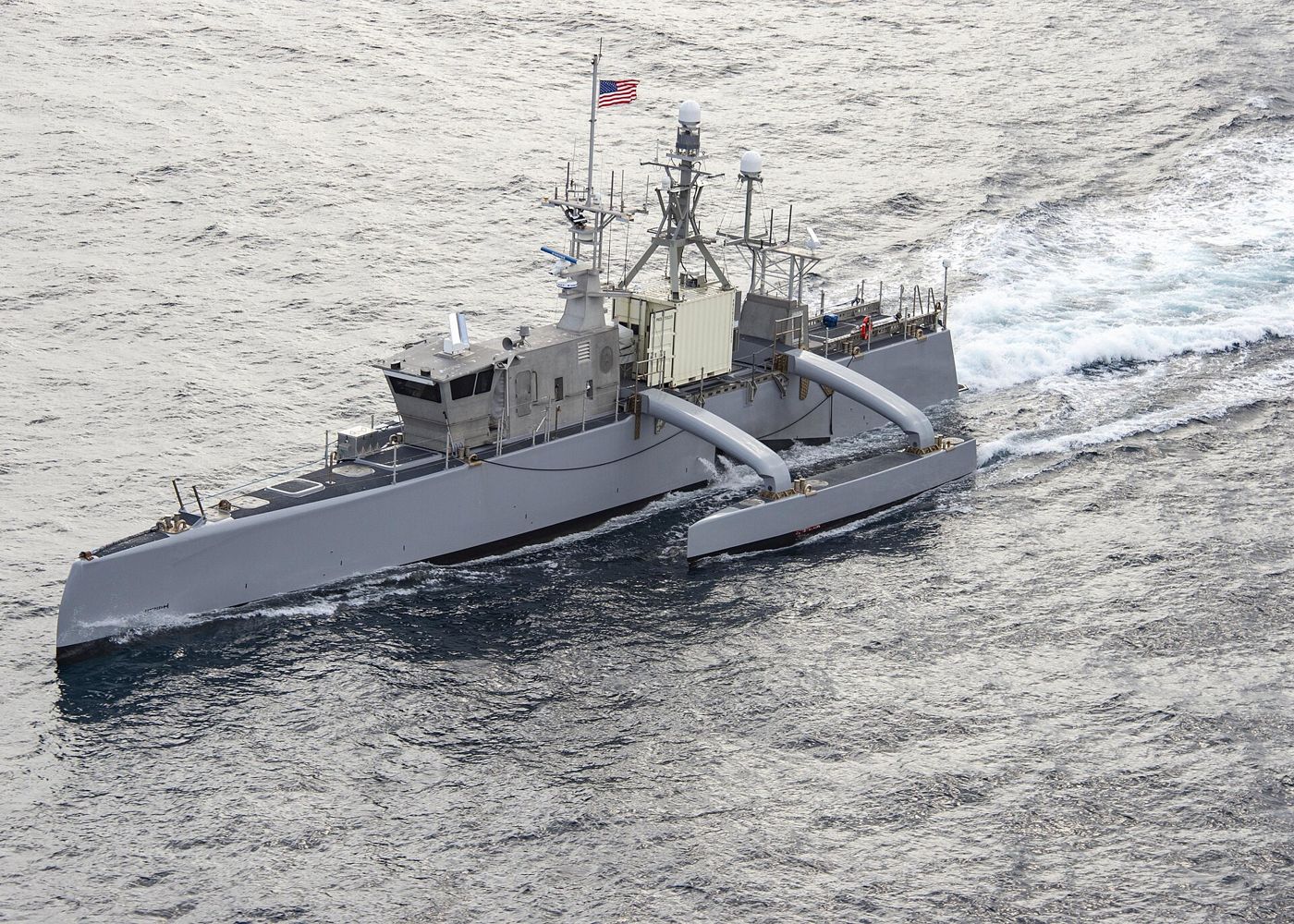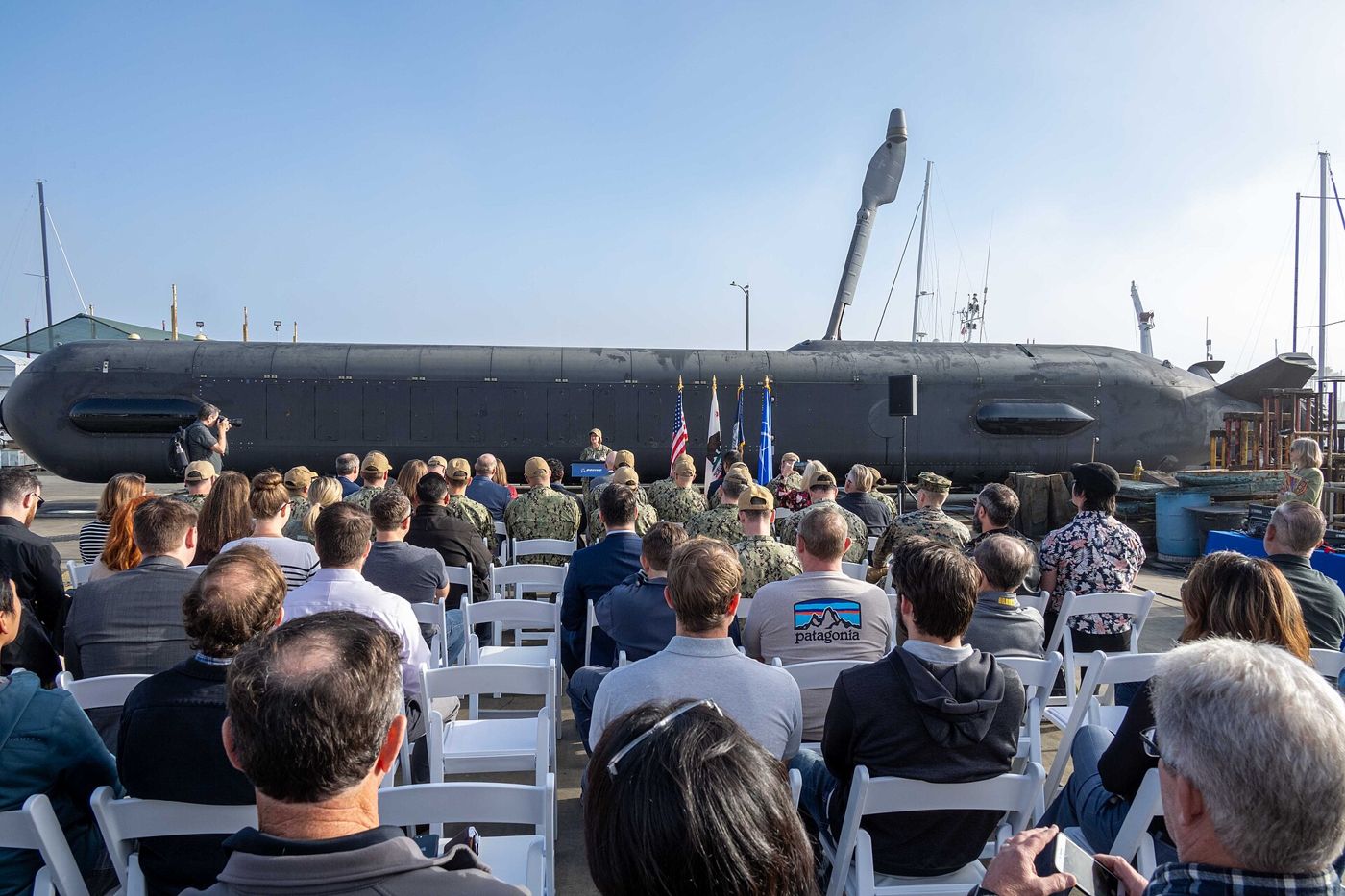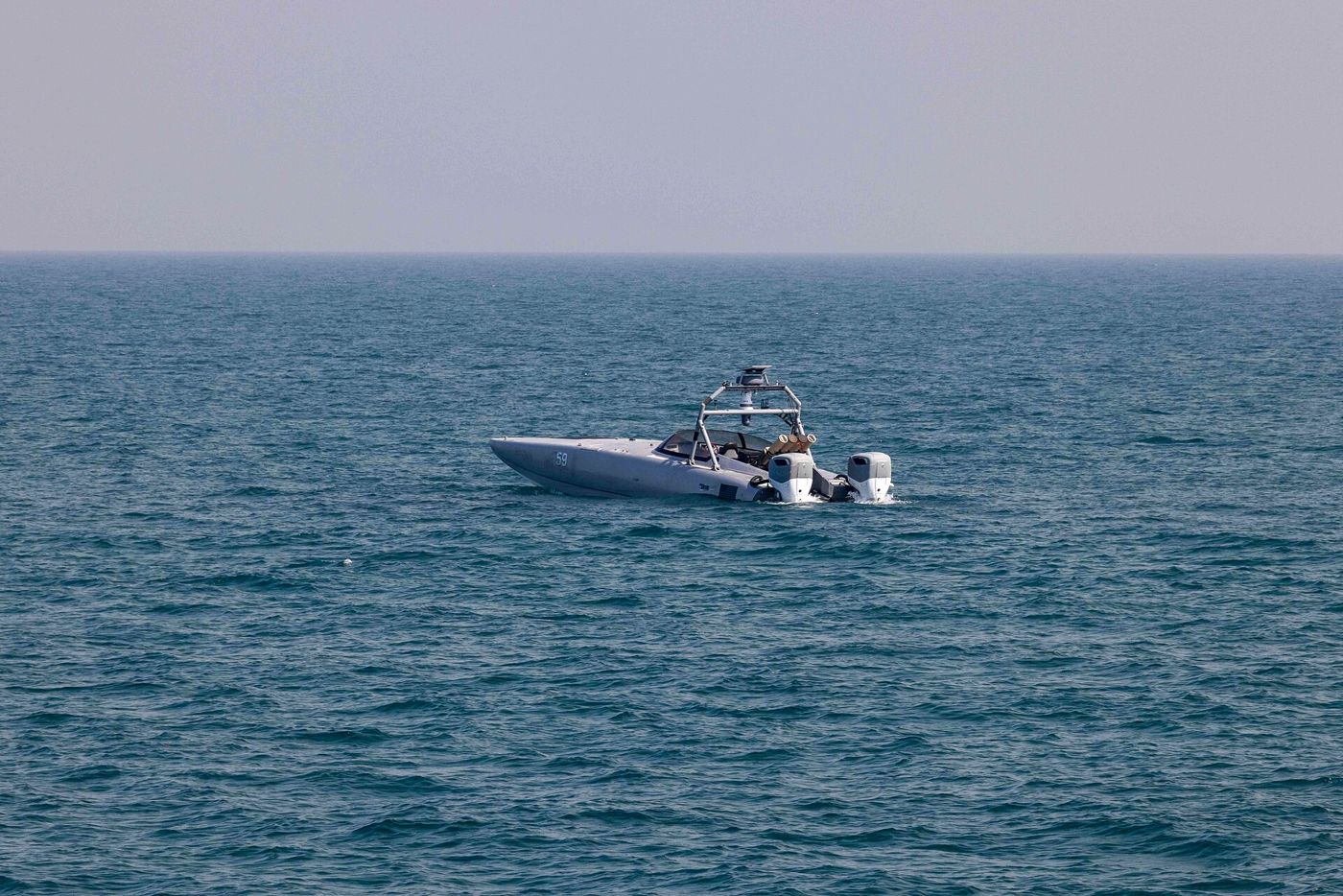
On the night of January 31, 2024, a group of Magura V5 explosive boats run by Group 13 of Ukraine’s military intelligence directorate closed on the Russian missile corvette Ivanovets in Lake Donuzlav in western Crimea. The agency’s chief, Lt. Gen. Kyrylo Budanov, claimed six direct hits and said the ship rolled astern and sank. Several Russian Telegram channels confirmed the loss. The attack took place more than 130 miles from the nearest Ukrainian port.
The Black Sea campaign shows that cheap explosive boats, steered by a person over a high-bandwidth satellite link, can deny a larger fleet the use of a confined sea. It does not show that the same boats work when the link is contested, when the transit is long, or when the defender has had four years to study the footage. The U.S. Navy is buying small attack craft at speed on the strength of the first finding, and its own tests have so far said little about the other three conditions.
Sea denial, bought with expendable boats
The strategic result is not in dispute. Writing for RUSI in August 2024, H I Sutton recorded that the Russian Navy had moved almost all its major assets to Novorossiysk, rerouted its Syria supply runs out of the Black Sea and cut back patrolling. He credited the boats together with shore-based anti-ship missiles, Storm Shadow and ATACMS. He also gave the price: Ukraine had built more than 100 boats and was working at “around 10:1 losses to kills.” Defense News, citing the U.S. Naval Institute, put the tally at roughly a dozen Russian warships sunk or damaged since 2022.
Most of what came later rests on Ukrainian claims. Budanov told The War Zone that Magura V7 boats shot down two Su-30 fighters with AIM-9 missiles on May 2, 2025; the outlet could not verify that, and Russian Telegram channels acknowledged one aircraft lost. The Security Service of Ukraine said it struck a Kilo-class submarine at its pier in Novorossiysk on December 15, 2025, with an underwater drone. Russia’s Defense Ministry said the attack failed, and Naval News found “no independent verification” that the boat sank. Much of the Sea Baby’s reported work is now against commerce: the service said one hit the sanctioned tanker Blue near Yalta on July 8, 2026.
Four years on, a person still steers
Russia’s answer arrived in layers. By December 2023 Sevastopol had nets, floating booms and a chain of barges, Be-12 flying boats were cueing Mi-8 and Ka-27 helicopters onto the boats, and ships and shore sites were jamming their links, which Sutton judged “moderately effective.” Russia began attacking the boats with first-person-view drones in May 2024 and by that September was training to launch them from helicopters.
Through all of it the boats stayed remotely piloted. Sutton’s RUSI account says satellite links such as Starlink and Kymeta allowed “human-in-the-loop navigation and targeting throughout the entire mission,” and that Ukraine was only exploring automation for the last stretch of an attack. Defense News described the Sea Baby this July as “primarily remote-piloted,” with AI-assisted navigation and targeting as a fallback when links are jammed. The dependence has a known cost: when SpaceX moved to restrict military use of Starlink in February 2023, Sutton expected Ukraine’s boats to become “less versatile,” because the link was what let pilots hundreds of miles away chase moving ships. Russian jamming degraded that link without closing it. A planner facing China should not assume the same outcome.
The Pacific version needs a launch point and a link
American commanders have been candid about the geography. Adm. Samuel Paparo of Indo-Pacific Command called such systems “ideal in enclosed spaces … if you can deploy it.” When Army Green Berets used Magura-derived explosive boats against a target ship in the Luzon Strait this spring, they controlled them from Batan Island, in an archipelago that reaches within 88 miles of Taiwan. USNI News noted that the same craft “may be ineffective in the open waters of the Indo-Pacific.”
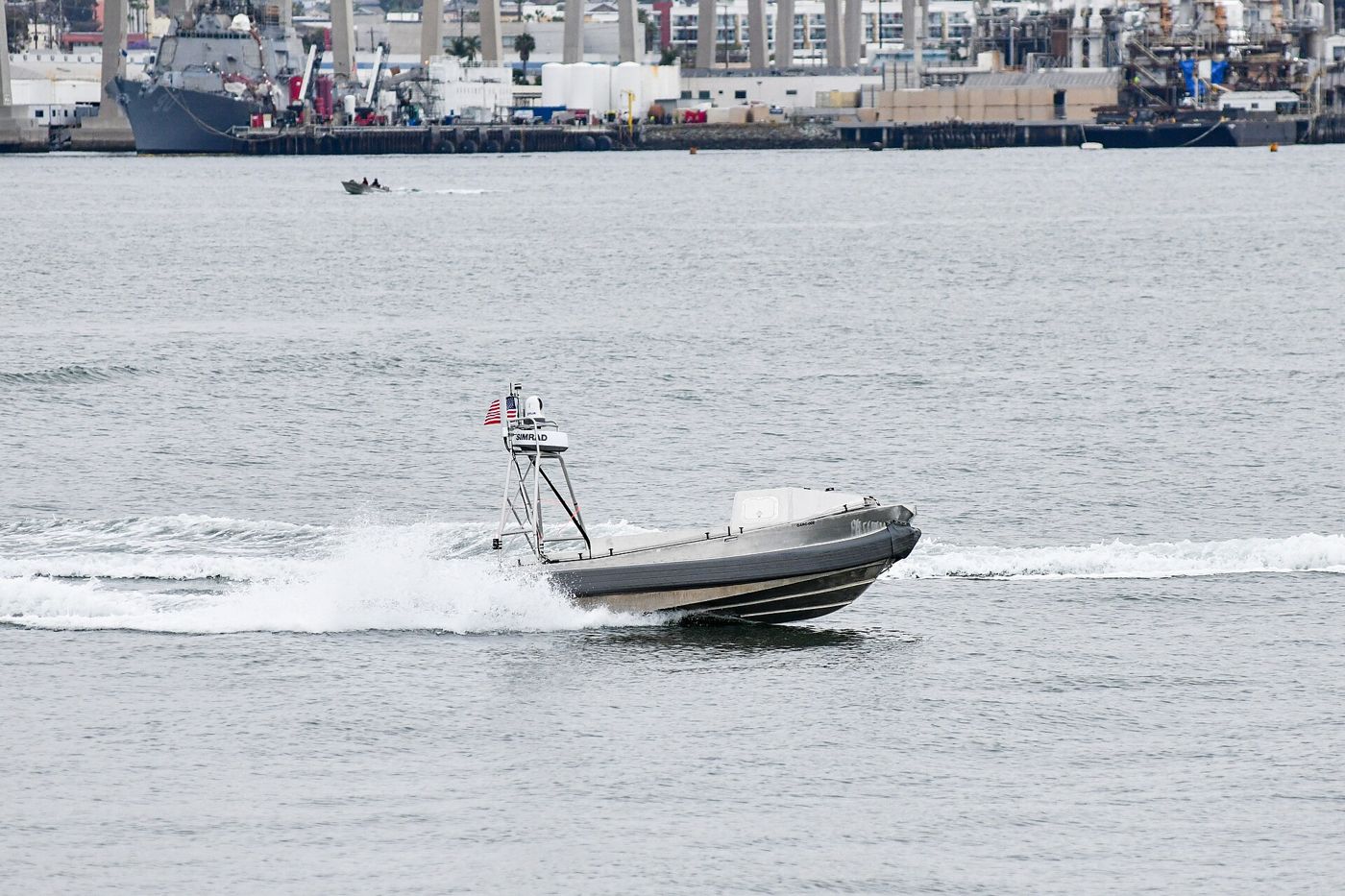
The Navy’s buying has outrun that caution. It has set a target of 32 Global Autonomous Reconnaissance Craft a month and, in December 2025, had Navy Secretary John Phelan announce a production deal for Saronic’s 24-foot Corsair. A Navy captain said in April that the service expects to field thousands of small boats across the Indo-Pacific by 2030, Defense News reported. On July 12, 2026, Central Command sent three Corsairs into Bandar Abbas, calling it “the first time American forces have employed sea drones in combat operations.” Five days later a 16-foot GARC struck the hulk of the former USS Peleliu at RIMPAC.
Both targets were stationary: a port maintenance facility and a ship with nobody aboard. Neither test resembles what the Black Sea became after 2023, when the targets maneuvered under helicopter cover and jammed the approach. The GARC’s published range is 700 nautical miles at 22 knots, about 32 hours of running, so in a Taiwan scenario it has to start from the first island chain or from the deck of a ship willing to go there. Defense News describes it as driven manually or given a radar target to follow.
Before the purchase reaches the thousands, the Navy should run these boats against moving, defended targets with the control link deliberately denied, and report how many get through. It should state the loss ratio it is planning around, since Ukraine’s was ten boats per kill against a weaker defender. It should fund the launch vessels and forward stocks that Paparo’s caveat implies, in the same budget lines as the boats. And it should require a demonstrated terminal attack without an operator before treating “autonomous” in a product name as a capability.
This analysis draws on the public sources linked in the text. Send corrections to info@defenseautonomyreview.com.