On April 16, Army Secretary Dan Driscoll told House appropriators that the service had bought 13,000 Merops interceptor drones in the first days of the war with Iran, at about $15,000 each, to shoot down Shahed attack drones he priced at $30,000 to $50,000. “We will make that trade all day long,” he said. The purchase, by his account, took about eight days.
The trade is a good one as far as it goes. The unit price, though, describes only the round. An interceptor drone reaches its target because a radar network has already found the target, a trained crew has launched in time, and the air is clear enough for a camera to see. Published success rates seldom say how many interceptors were launched for each kill or in what conditions. Buyers who want Ukraine’s results should price the whole system and ask for performance data sorted by weather and target speed.
Ukrainian intercepts still depend on a pilot who can see
Ukraine’s homegrown interceptors cost $1,000 to $3,000 apiece, and Kyiv’s claims for them are large. Commander-in-Chief Oleksandr Syrsky said interceptor drones accounted for 70 percent of the Shahed-class drones destroyed around Kyiv in February. Andrii Hrytseniuk, who heads the government’s Brave1 defense-technology cluster, told The War Zone in May that Ukraine can build more than 2,000 interceptors a day.
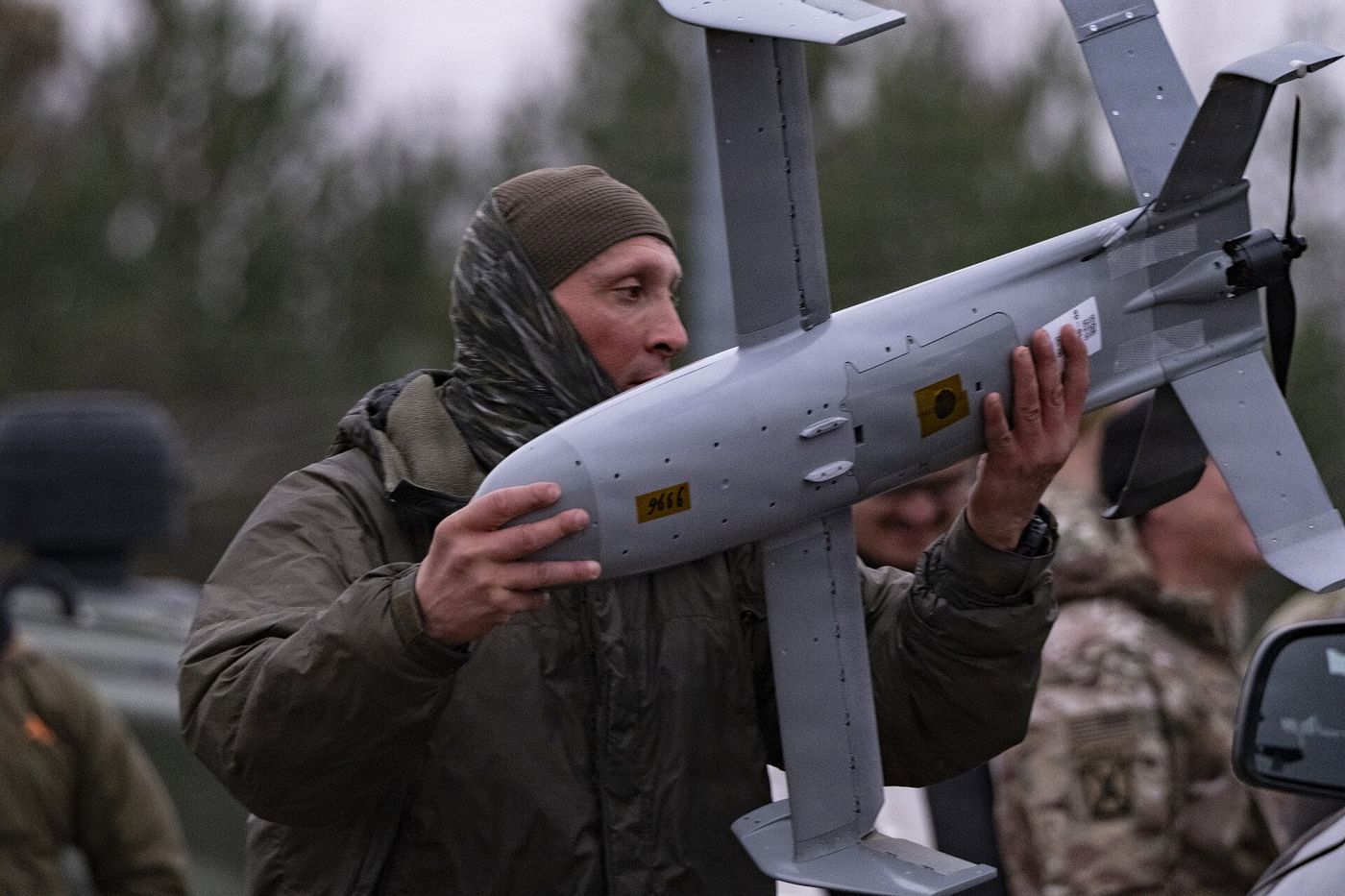
The usual engagement is less automated than those numbers suggest. As Euromaidan Press described it in August, drawing on a post by presidential adviser Serhii Beskrestnov, the radar network steers the interceptor toward the target, then a pilot has to find the drone visually, chase it and hit it. Fog and cloud, the outlet reported, can leave that pilot “unable to see more than a dozen meters,” and success rates fall in winter. Beskrestnov’s proposed remedy is a small radar seeker that an American firm sells for about $4,000, more than many of the airframes it would ride on, and by the same account he cautioned that it remains to be seen whether it works.
Automation is arriving at the terminal phase first. Hrytseniuk described a “human-on-the-loop” arrangement in which a person arms, disarms or cancels while software closes on the target, and he claimed hit rates are higher that way. Finding the target and deciding to engage remain crew work. Speed is the other ceiling. Breaking Defense reported in August that Russia’s growing use of jet-powered Geran-3 and Geran-4 drones has left propeller-driven interceptors “insufficient to counter them.” Merops tops out at 280 kilometers per hour.
American interceptors automate more and cost more
The U.S. inventory sits higher on the price curve because it carries its own seeker. Raytheon’s Coyote Block 2 and Anduril’s Roadrunner-M are jet-powered and, as The War Zone put it, “have to be cued to their targets” by other sensors before onboard seekers take over. A Block 2 Coyote reportedly costs around $100,000. Anduril founder Palmer Luckey put Roadrunner in the “low hundreds of thousands of dollars” when it was unveiled in December 2023 and said its onboard sensors find the target and compute the intercept; in the demonstration reported at the time, an operator still marked the target hostile by hand. Anduril’s smaller Anvil, part of a $642 million, 10-year Marine Corps installation-defense contract awarded in March 2025, is billed as an autonomous interceptor for drones of 55 pounds or less.
The contracts show where the money goes. The Army’s $5.04 billion Coyote award of Sept. 29, 2025, which runs through September 2033, pays for fixed and mobile launchers and Ku-band radars along with the interceptors. The Pentagon’s October 2024 order for more than 500 Roadrunner-Ms came to roughly $250 million with Pulsar electronic warfare systems included. The $1.98 billion sale to Kuwait that the State Department approved on June 5 bundles Roadrunner and Anvil with sensor towers, jammers and command software.
Merops is the cheap end of the American buy. It can fly autonomously or be remotely piloted, and in May the Pentagon’s counter-drone task force, JIATF-401, gave its maker, Perennial Autonomy, a three-year contract with a $500 million ceiling. Its record has gaps too. C4ISRNET reported that footage in mid-June showed Merops interceptors failing to down a Russian drone, and that a Romanian field test in April logged a miss the military attributed to “target maneuvering.”
What belongs in the contract file before the order
A buyer comparing a $15,000 interceptor with a $40,000 Shahed is comparing one shot with one target. The comparison that matters is cost per kill, which requires the number of interceptors launched per target destroyed, including the ones that never found it. It also requires the price of the radar coverage that makes cueing possible and of the crews who fly the last kilometer. One Ukrainian crew’s claim of “about a 95% success rate” rested, in its own telling, on a sample of ten sorties.
Ceilings deserve the same scrutiny. When JIATF-401 and the Army announced $4.15 billion in counter-drone awards on Sept. 29, DefenseScoop reported that only $50 million had been obligated, with the rest dependent on fiscal 2027 appropriations. The independent testing that would answer the performance questions is thinner as well: Breaking Defense has reported that the Pentagon’s operational test office was cut from 126 civilians to 30.
JIATF-401 should make every interceptor order conditional on test results reported by visibility and target speed, with shots per kill stated, and it should publish system cost alongside round cost. Until those numbers exist, interceptor drones are best bought as one layer that works against slow targets in clear air, with money held back for whatever covers the fog and the jets.
This analysis draws on the public sources linked in the text. Send corrections to info@defenseautonomyreview.com.